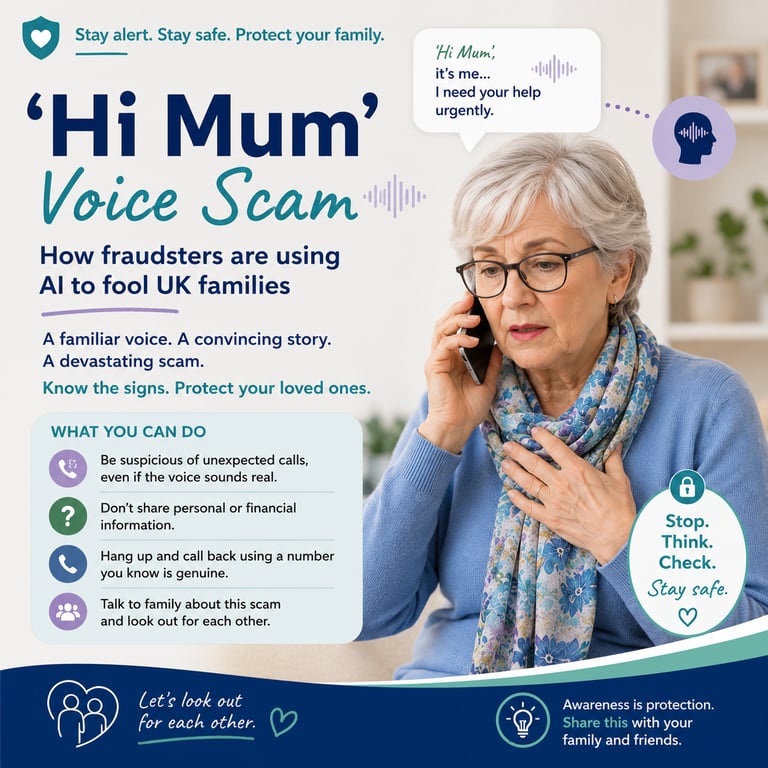
The 'Hi Mum' Voice Scam: How Fraudsters Are Using AI to Fool UK Families
Imagine receiving a voice message on WhatsApp from your son or daughter. They sound distressed. They say they've lost their phone, they're in trouble, and they urgently need you to send money. The voice is unmistakably theirs. But it isn't them. It's a fraudster using artificial intelligence to clone your child's voice — and it's happening to UK families right now.
Software for Seniors
6/16/20262 min read
What is the Hi Mum scam?
The Hi Mum scam — also known as the WhatsApp family impersonation scam — has been around for a few years. Originally, fraudsters would simply text pretending to be a family member with a new number. But in 2026, the scam has evolved in a deeply alarming way.
Criminals now use AI voice cloning technology to recreate someone's voice from just a few seconds of audio — often taken from videos posted on social media or YouTube. They then send a voice message to that person's relatives, sounding exactly like them, claiming to be in urgent need of money.
How does it work?
1. The fraudster finds a video of your family member online — even a short clip is enough
2. They use AI software to clone the voice from that video
3. They send a WhatsApp voice message to you, pretending to be your relative in distress
4. They ask you to transfer money urgently to an unfamiliar account
5. By the time you realise something is wrong, the money is gone
The warning signs
• A voice message from a family member on an unfamiliar number
• An urgent request for money — especially to a new bank account
• A reason why they can't talk normally (lost phone, abroad, in trouble)
• Pressure to act quickly and not tell anyone else
• The message arrives at an unusual time — late at night or early morning
What to do if you receive one of these messages
Stop. Don't send any money, no matter how convincing the voice sounds. Then:
6. Call your family member directly on their usual number — not the number the message came from
7. If you can't reach them, call another family member to check
8. Agree a family safe word that you can use to verify identity in emergencies
9. If you think you've been targeted, report it to Action Fraud: 0300 123 2040
The family safe word — a simple but powerful protection
One of the most effective protections against this scam is agreeing a secret safe word with your family. This is a word that only your immediate family knows — something unusual that a fraudster couldn't guess. If you ever receive an urgent message from a family member, ask them to confirm the safe word before doing anything.
It sounds simple, but it works. Talk to your family about setting one up today.
What about protecting your own voice?
Be mindful of videos you post publicly on social media — particularly those where you speak for an extended period. This applies to your family members too, especially grandchildren whose voices might appear in videos shared online. You don't need to stop sharing — just be aware that public videos are accessible to anyone.
Report it and share it
If you've been targeted — even if you didn't fall for it — please report it to Action Fraud and your local police. Every report helps build the picture of how widespread this crime is.
And please share this guide with family and friends. The more people who know about this scam, the harder it becomes for fraudsters to succeed.
For more guides to staying safe online and on the phone, visit softwareforseniors.co.uk.
Need help choosing the right app?
Browse our guides or get in touch — we're here to help.
get in touch
hello@softwareforseniors.co.uk
© 2026. All rights reserved.