Courier Fraud: Why Someone Might Turn Up At Your Door Asking For Your Bank Card
What you'll learn: what courier fraud is, how the scam actually unfolds step by step, the warning signs to watch for, and exactly what to do if it happens to you or someone you love — with no blame attached.
Software for Seniors
7/24/20263 min read

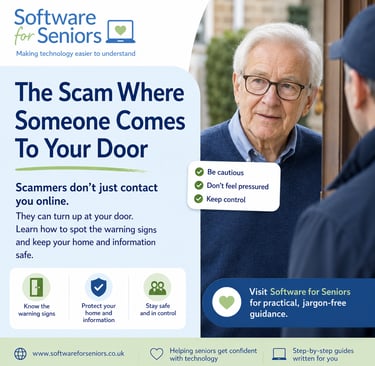
It Doesn't Start At Your Door
If you picture a scam involving a 'courier', you might imagine a stranger simply turning up and asking for something. In reality, courier fraud almost always starts much more quietly — with a phone call that sounds entirely believable.
TSB has recently warned of a sharp rise in this exact scam targeting older people across the UK, with some victims losing as much as £8,500 in a single incident. It's a distressing figure, but understanding exactly how the scam works is the best protection there is — so let's walk through it calmly, step by step.
How The Scam Works
The call. Someone rings claiming to be from your bank's fraud team, or sometimes the police. They often already know your name, and may even know your bank.
The alarm. They tell you your card has been compromised, or that a criminal has been caught trying to use it — and that quick action is needed to protect your money.
The 'solution'. They explain that, to keep your card safe, a courier will come to collect it from your home — sometimes asking you to cut it in half first, which can feel reassuring, as if you're the one in control.
The PIN request. At some point, they ask for your PIN too — often framed as needed 'to cancel the card safely' or 'to verify your identity'.
The collection. A courier — sometimes a taxi driver hired without knowing what they're collecting — arrives at your door and takes the card.
Once the card and PIN are both in the scammer's hands, they can withdraw cash or make purchases before you've even had a chance to realise something was wrong.
Why It Works So Well
This scam is effective because it borrows the authority of institutions we're taught to trust — banks and police — and creates a sense of urgency that discourages people from stopping to check. It's also designed to feel like you're being protected, not targeted, right up until the moment the card leaves your hands.
None of this reflects poorly on anyone who has been caught out by it. These scams are run by organised, well-rehearsed criminals — not opportunistic amateurs — and they've had a great deal of practice sounding convincing.
The One Fact That Matters Most
Your bank and the police will never ask you to hand your card or PIN to a courier, a taxi driver, or anyone who visits your home. Never. There are no exceptions to this, regardless of how the request is explained to you.
If you remember nothing else from this article, remember that single fact — it's the one piece of information that stops this scam in its tracks every time.
What To Do If You Get A Call Like This
Hang up the phone, even if the caller becomes insistent or tries to keep you on the line.
Wait a few minutes before doing anything else — some scammers stay on the line after you 'hang up' by not releasing the call on their end.
Call your bank directly using the number printed on the back of your card, or the number in your bank's official app — never a number given to you by the caller.
Never hand your card, PIN, or any personal banking details to anyone who visits your home, however official they seem.
If in doubt, ask a family member or trusted friend to help you check before you act.
If It's Already Happened
If you've already handed over a card or PIN and realise something isn't right, don't waste time feeling embarrassed — speed matters far more than pride here.
Contact your bank immediately to freeze the card and account.
Report it to Action Fraud on 0300 123 2040, or via actionfraud.police.uk.
If you're currently on the phone with the scammer or they're still nearby, call 999.
Banks are generally supportive in these situations and have experience helping people recover from exactly this scam — the sooner you get in touch, the better your chances of limiting the damage.
A Final Word
Scams like this rely on catching people off guard, not on people being careless. Knowing the pattern in advance — the call, the alarm, the 'courier', the PIN request — is what breaks it. Share this article with a friend or family member; a two-minute read now could save someone thousands of pounds later.
Need help choosing the right app?
Browse our guides or get in touch — we're here to help.
get in touch
hello@softwareforseniors.co.uk
© 2026. All rights reserved.